Why Varicose Veins Get Worse During Houston Summers

How Laser Treatment for Varicose Veins Works: Benefits, Procedure & Recovery
June 22, 2026
10 Anti-Inflammatory Foods That Help Protect and Strengthen Your Blood Vessels
July 25, 2026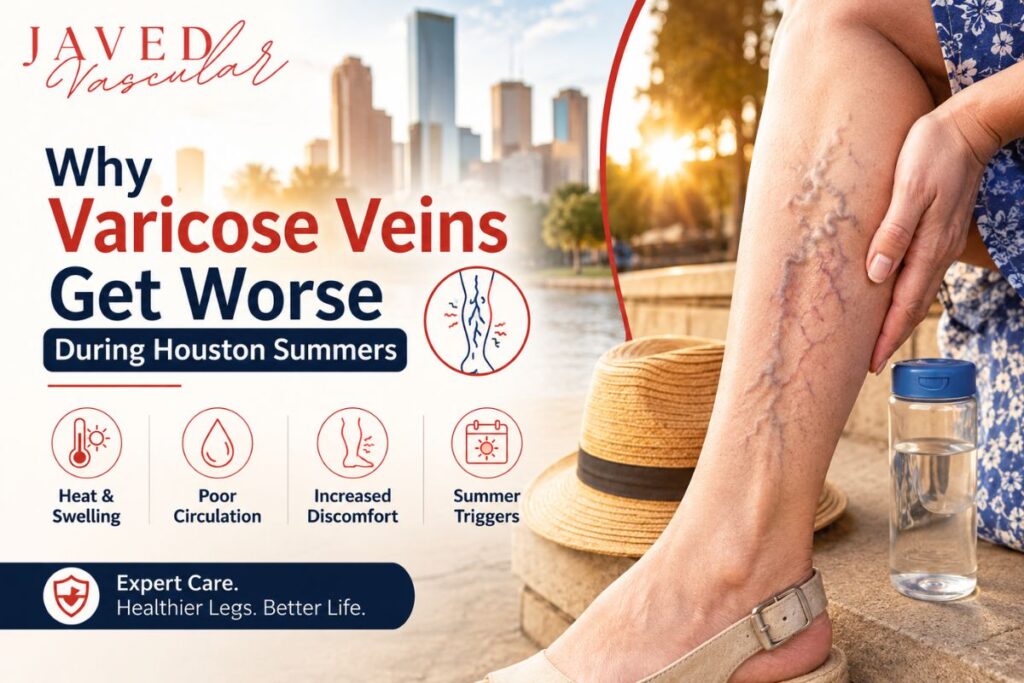
If your legs feel heavier, more swollen, or more uncomfortable during Houston’s hottest months, you’re not imagining it. Many people notice that their varicose vein symptoms become worse during the summer, especially when temperatures rise and humidity levels stay high.
Varicose veins are already a common condition, but Houston’s long, hot summers can make symptoms more noticeable and sometimes more difficult to manage. Understanding why this happens can help you take steps to reduce discomfort and know when it may be time to seek professional care.
What Are Varicose Veins?
Varicose veins are enlarged, twisted veins that usually appear on the legs and feet. They develop when the valves inside the veins become weak or damaged. Normally, these valves help blood flow back toward the heart. When they stop working properly, blood can pool inside the veins, causing them to stretch and bulge.
Some people experience only cosmetic concerns, while others develop symptoms such as:
- Leg heaviness
- Aching or throbbing pain
- Swelling in the legs and ankles
- Burning or itching sensations
- Muscle cramps
- Fatigue after standing for long periods
Many of these symptoms become more noticeable during Houston’s hot summer season.
Why Does Summer Make Varicose Veins Worse?
The primary reason is heat.
When temperatures rise, your body naturally tries to cool itself. One way it does this is by expanding blood vessels near the skin’s surface. This process is called vasodilation.
While vasodilation helps regulate body temperature, it can create problems for people with varicose veins.
As veins expand, the already weakened valves inside them have a harder time pushing blood upward against gravity. This allows more blood to collect in the veins, increasing pressure and worsening symptoms.
In a city like Houston, where summer temperatures frequently reach the 90s and humidity remains high, this effect can be significant.
Increased Leg Swelling During Houston Summers
One of the most common complaints among varicose vein patients during summer is swelling.
Heat causes fluids to accumulate more easily in the lower legs and ankles. Combined with poor vein function, this can lead to noticeable swelling by the end of the day.
You may notice:
- Tight shoes in the evening
- Swollen ankles
- Puffy feet
- Increased discomfort after standing
People who work outdoors, spend time walking in the heat, or stand for long periods often experience even greater swelling.
Humidity Can Make Symptoms Feel Worse
Houston’s humidity adds another challenge.
High humidity reduces the body’s ability to cool itself efficiently through sweat evaporation. As a result, blood vessels may remain dilated for longer periods.
This can increase feelings of:
- Leg fatigue
- Aching
- Restlessness
- Heaviness
Many patients describe their legs as feeling “full” or “weighed down” during the hottest months of the year.
Summer Activities Can Increase Vein Pressure
Summer often means vacations, road trips, outdoor events, and long periods of standing.
These activities may unintentionally worsen varicose vein symptoms.
Long Car Rides
Extended sitting reduces circulation in the legs. Blood flow slows, allowing blood to pool in weakened veins.
Outdoor Events
Standing for hours at festivals, sporting events, or family gatherings increases pressure inside leg veins.
Air Travel
Summer travel often involves flights. Sitting in a cramped position for several hours can contribute to swelling and discomfort.
For people already dealing with varicose veins, these situations can make symptoms more noticeable.
Can Varicose Veins Become Dangerous in Summer?
Most varicose veins are not immediately dangerous, but worsening symptoms should never be ignored.
Persistent swelling, skin changes, pain, or the development of leg wounds may indicate progressing vein disease.
If you are unsure whether your symptoms require medical attention, our guide on when to worry about varicose veins explains the warning signs that should not be overlooked.
Seeking evaluation early often helps prevent more serious complications later.
Who Is Most Likely to Experience Worse Symptoms?
Certain people are more vulnerable to summer-related vein problems.
Risk factors include:
- Family history of varicose veins
- Pregnancy
- Obesity
- Aging
- Jobs requiring prolonged standing
- Previous vein problems
- Limited physical activity
Houston residents who spend significant time outdoors during summer may also experience increased symptoms due to prolonged heat exposure.
How to Reduce Varicose Vein Symptoms During Summer
While you cannot control Houston’s weather, you can take steps to protect your veins.
Stay Active
Walking helps the calf muscles pump blood back toward the heart.
Even short walks throughout the day can improve circulation and reduce blood pooling.
Elevate Your Legs
Whenever possible, elevate your legs above heart level for 15 to 20 minutes.
This helps reduce pressure and encourages better blood flow.
Stay Hydrated
Proper hydration supports healthy circulation and may help reduce swelling.
During Houston summers, dehydration can occur quickly, especially when spending time outdoors.
Avoid Prolonged Standing
If your job requires standing, try shifting positions regularly and taking short walking breaks when possible.
Wear Compression Stockings
Compression stockings gently support the veins and encourage blood flow.
Many patients notice significant symptom relief when wearing them consistently.
Avoid Excessive Heat Exposure
Hot tubs, saunas, and prolonged sun exposure may further dilate veins and increase discomfort.
Seeking shade and cooler environments can help minimize symptoms.
When Conservative Measures Are Not Enough
Lifestyle changes can help manage symptoms, but they cannot repair damaged vein valves.
If your discomfort continues despite self-care measures, it may be time to consult a varicose vein doctor in Houston for a complete evaluation.
Modern vein treatments are far less invasive than many people realize and often require little downtime.
Modern Treatment Options for Varicose Veins
Advances in vascular medicine have made treatment safer and more comfortable than ever before.
One of the most effective options is laser treatment for varicose veins, which uses targeted energy to close damaged veins and redirect blood flow to healthier veins.
Depending on your condition, a vein specialist may also recommend other minimally invasive procedures designed to relieve symptoms and improve circulation.
Patients throughout the Houston area often seek care from a qualified varicose vein specialist when symptoms begin affecting their daily lives.
Why Vein Health Matters Beyond Appearance
Many people think varicose veins are only a cosmetic issue. However, untreated vein disease can sometimes affect overall leg health.
Poor circulation may contribute to skin changes, chronic swelling, and in some cases wounds that become difficult to heal.
Individuals managing diabetes should be particularly attentive to leg and foot health. Understanding the early warning signs discussed in our guide about diabetic foot problems can help prevent serious complications.
Maintaining healthy circulation is an important part of long-term vascular health.
The Bottom Line
Houston summers can make varicose vein symptoms noticeably worse. Heat causes veins to expand, increases blood pooling, and contributes to swelling, heaviness, and discomfort.
While simple measures such as staying active, elevating your legs, staying hydrated, and wearing compression stockings can help, persistent symptoms should not be ignored.
If your varicose veins are becoming more painful, swollen, or disruptive during the summer months, a professional evaluation can help identify the underlying cause and determine whether treatment may improve your comfort and quality of life.
The good news is that effective, minimally invasive treatment options are available, allowing many patients to enjoy healthier legs and greater comfort throughout Houston’s hottest season.