
Poor Blood Circulation in Hands: Symptoms, Causes & Relief

Venous Ulcers vs Arterial Ulcers: Key Differences, Symptoms & Treatment
May 23, 2026
When Should You Worry About Varicose Veins? Signs, Risks, and Treatment Options
June 6, 2026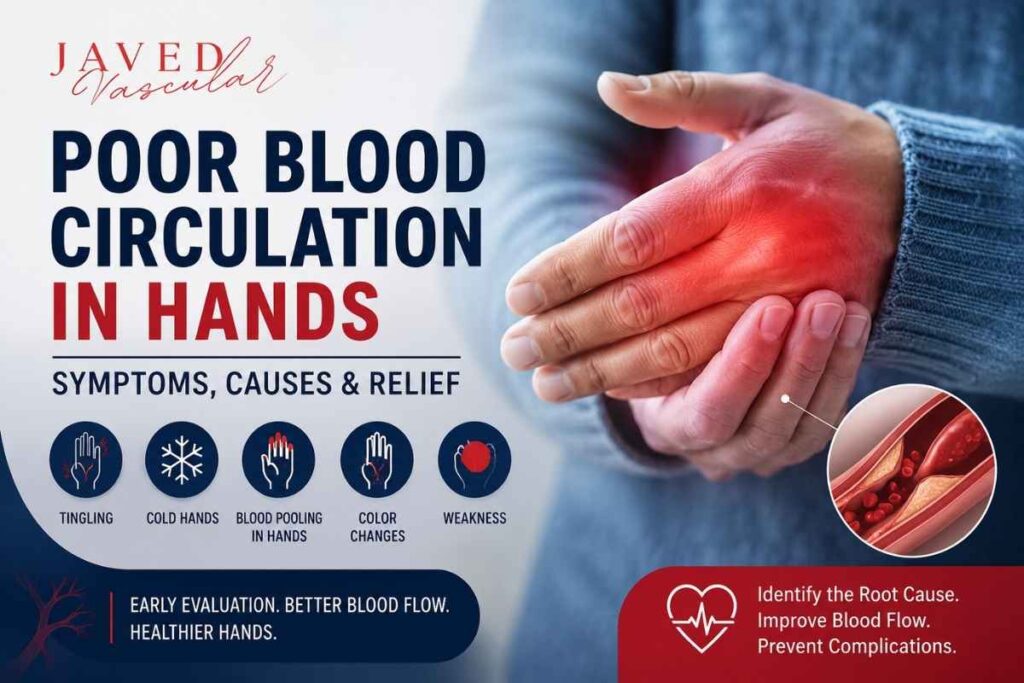
If your hands often feel cold, numb, weak, or tingly, your body may be warning you about a circulation problem. Many people notice blood pooling in hands, color changes, swelling, or a heavy sensation in the arms but ignore the symptoms until they become more uncomfortable. Poor blood circulation symptoms in hands can develop slowly and may be linked to nerve pressure, narrowed blood vessels, smoking, diabetes, or other health conditions. In some cases, a lack of circulation in hands can make daily activities harder, especially when gripping, typing, or using your fingers for long periods. Understanding the cause early can help improve blood flow and prevent symptoms from getting worse.
What Are the Signs of Poor Blood Circulation in Hands?
The signs of poor circulation are often easy to miss in the beginning, especially when symptoms come and go. Many people experience poor blood flow symptoms during cold weather, after sleeping, or while keeping their arms in one position for too long. Common bad circulation in hands symptoms include:
- Cold fingers or constantly cold hands
- Tingling sensation or “pins and needles”
- Numbness in the fingers or palm
- Swelling or tightness in the hands
- Blue, pale, or reddish skin color changes
- Weak grip strength while holding objects
- Heaviness or aching in the arms
- Pain or stiffness after sleeping
- Blood pooling in hands when hanging down
- Hands becoming tired quickly during daily tasks
These signs of poor blood circulation in hands may happen occasionally or become more noticeable over time. If symptoms continue or worsen, consulting a Vascular Surgeon in Houston TX at Javed Vascular may help identify the underlying cause and improve circulation before complications develop.
What Causes Bad Circulation in Hands and Arms?
There are several causes of bad circulation in hands, and the symptoms can range from mild discomfort to ongoing numbness or weakness. Some conditions affect blood vessels directly, while others reduce blood flow because of pressure on nerves or unhealthy lifestyle habits.
- Peripheral artery disease (PAD): Narrowed arteries can reduce blood flow to the arms and hands, especially in people with diabetes or smoking history.
- Blood vessel narrowing: Cholesterol buildup inside arteries may limit healthy circulation and cause cold or pale hands.
- Nerve compression: Conditions like carpal tunnel syndrome or neck nerve pressure can create tingling, numbness, and sensations similar to poor circulation in arms.
- Diabetes: High blood sugar can damage blood vessels and nerves over time, affecting circulation in the hands and fingers.
- Smoking: Nicotine tightens blood vessels and lowers oxygen supply, increasing circulation problems.
- Raynaud’s syndrome: Cold temperatures or stress can temporarily reduce blood flow, causing fingers to turn white or blue.
- Blood clots: A clot can suddenly block circulation and may feel like losing blood circulation in arm or hand.
- Poor posture or sitting too long: Keeping the arms in one position for extended periods may temporarily reduce blood flow.
- Cold weather: Low temperatures naturally narrow blood vessels, making circulation symptoms more noticeable.
How to Increase Blood Circulation to Hands Naturally
If you are wondering how to increase blood circulation to hands naturally, small daily habits can often help improve blood flow and reduce discomfort. The goal is to keep blood vessels active and avoid long periods of reduced movement.
- Stretch your hands and fingers regularly
Simple hand stretches and wrist rotations may help reduce stiffness and improve circulation. - Walk daily
Walking improves overall blood flow and helps the body circulate oxygen more efficiently. - Do arm movement exercises
Light shoulder rolls and arm raises can help prevent poor circulation caused by inactivity. - Stay hydrated
Proper hydration supports healthy blood flow and circulation throughout the body. - Reduce or quit smoking
Smoking narrows blood vessels and can worsen circulation problems over time. - Keep your hands warm
Wearing gloves during cold weather may help prevent blood vessels from tightening. - Improve posture
Avoid sleeping or sitting in positions that place pressure on the arms or wrists. - Manage stress levels
Stress can temporarily affect circulation and trigger symptoms in some people. - Use compression gloves if recommended
Some individuals may benefit from mild compression support during daily activities. - Control diabetes and blood pressure
Managing these conditions can help protect blood vessels and improve long-term circulation health.
When Is Poor Blood Flow in Hands Serious?
Occasional cold hands or mild tingling may not always be dangerous, but certain poor blood flow symptoms should never be ignored. Sudden numbness, severe pain, or one arm becoming colder than the other can sometimes point to a more serious circulation problem. Skin turning blue, purple, or black may indicate reduced oxygen supply to the tissues.
Open sores, slow-healing wounds, or ulcers on the fingers or hands can also be warning signs, especially in people with diabetes or vascular disease. In some cases, symptoms gradually worsen and begin affecting grip strength, movement, or daily activities.
These symptoms may require vascular evaluation to identify blocked blood vessels or circulation disorders early. Patients experiencing non-healing wounds or circulation-related skin damage may also benefit from specialized Wound Care Treatment in Houston through Javed Vascular. If circulation problems occur after a neurological event, consulting a Stroke Rehabilitation Doctor in Houston may also help improve recovery and arm function.
Treatment Options for Poor Cirulation in Hands
Treatment for poor circulation in the hands depends on the underlying cause and the severity of symptoms. In many cases, simple lifestyle changes such as regular exercise, quitting smoking, improving posture, and managing diabetes or blood pressure can help improve blood flow naturally.
Some patients may also need medications to support circulation, reduce clot risk, or control conditions affecting the blood vessels. If symptoms continue, a vascular specialist may recommend vascular testing to check how well blood is moving through the arteries and veins.
An ultrasound is commonly used to detect narrowed or blocked blood vessels without surgery. When circulation problems are linked to blocked arteries, treatment may involve minimally invasive vascular procedures designed to restore healthier blood flow with smaller incisions and shorter recovery time.
Early treatment can help reduce discomfort, improve hand function, and prevent circulation problems from becoming more serious over time.
Frequently Asked Questions
Can blood pooling in hands be serious?
Sometimes, yes. Occasional blood pooling in hands may happen from posture or inactivity, but persistent swelling, discoloration, pain, or heaviness could indicate an underlying circulation problem that should be evaluated.
Why do my hands feel numb and cold?
Coldness and numbness can occur when blood flow is reduced or when nerves are compressed. Conditions like poor circulation, diabetes, carpal tunnel syndrome, or Raynaud’s syndrome may contribute to these symptoms.
Can dehydration affect blood circulation?
Yes. Dehydration can make blood flow less efficiently and may worsen symptoms like cold hands, dizziness, or tingling sensations in some people.
Does exercise improve circulation in hands?
Regular movement can help improve circulation. Walking, hand stretches, and light arm exercises support healthier blood flow and may reduce stiffness or tingling.
When should I see a doctor for circulation problems?
You should seek medical attention if symptoms become frequent, painful, or worsen over time. Sudden numbness, skin discoloration, ulcers, or weakness in the arm or hand should not be ignored.
Concerned About Poor Circulation in Your Hands?
Persistent numbness, tingling, cold hands, or color changes should not be ignored. At Javed Vascular, a proper vascular evaluation can help identify the root cause of your symptoms and determine the best way to improve blood flow. Early care may help prevent circulation problems from worsening and support better hand and arm function over time.