Venous Ulcers vs Arterial Ulcers: Key Differences, Symptoms & Treatment

Varicose Veins: More Than a Cosmetic Concern
December 6, 2025
Poor Blood Circulation in Hands: Symptoms, Causes & Relief
May 29, 2026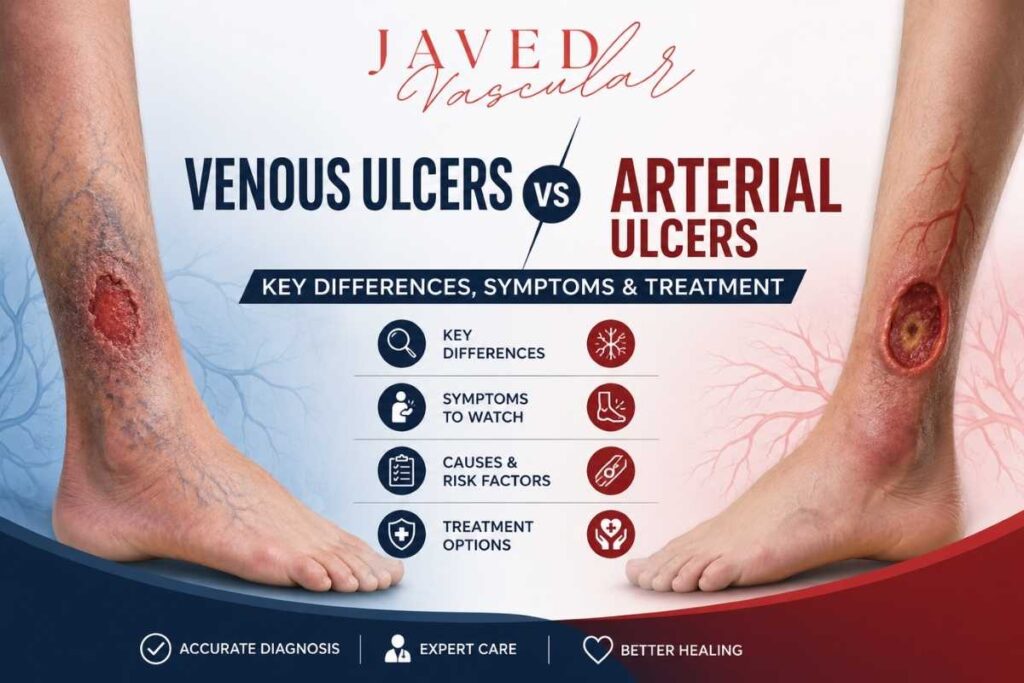
Leg ulcers are non-healing wounds often caused by poor circulation and underlying vascular issues. Understanding the difference between venous ulcers vs arterial ulcers is important because each requires a different treatment approach, and delayed care can slow healing or lead to serious complications. At Javed Vascular in Houston, TX, Dr. Malik provides expert vascular evaluation to identify the cause of leg ulcers and recommend the right treatment for better recovery.
What Are Leg Ulcers and Why Do They Happen?
Leg ulcers are open wounds or sores that develop when the skin takes a long time to heal, often due to poor blood circulation. They usually appear on the lower legs, ankles, or feet and can become painful if left untreated. Poor circulation is one of the main reasons these ulcers form because blood carries oxygen and nutrients needed for healing.
The main difference between venous and arterial ulcers lies in how blood flow is affected. Arterial ulcers and venous ulcers both impact healing, but arterial ulcers happen when narrowed arteries reduce blood flow to the legs, while venous ulcers develop when damaged veins struggle to return blood back to the heart. Chronic leg ulcers should never be ignored, as delayed treatment can increase the risk of infection, tissue damage, and serious vascular complications.
What Is an Arterial Ulcer?
An arterial ulcer is an open sore that develops when blood flow through the arteries is reduced, limiting oxygen and nutrients needed for proper healing. These ulcers are often linked to Peripheral Artery Disease (PAD) or blocked arteries, which can affect circulation in the lower legs and feet. Unlike some wounds that heal over time, arterial ulcers usually require medical attention to prevent worsening tissue damage.
Commonly, arterial ulcers appear on the toes, feet, heels, or outer ankle areas. They often look different in an arterial ulcer vs venous ulcer comparison because arterial ulcers are usually deep, round, and pale or dry in appearance.
Some common signs of an arterial ulcer include:
- Severe pain, especially at rest or during the night
- Cold or shiny skin around the affected area
- Weak or absent pulses in the feet
- Slow healing wounds or blackened tissue in severe cases
Early diagnosis is important to improve circulation and reduce complications. Consulting a Vascular Surgeon in Houston can help identify the underlying cause and guide the right treatment plan.
What Is a Venous Ulcer?
A venous ulcer is an open wound that develops when veins in the legs do not properly return blood back to the heart. This condition, often caused by venous insufficiency, leads to blood pooling in the lower legs, increasing pressure and slowing the healing process. Venous ulcers are one of the most common types of leg ulcers and usually need proper vascular care for healing.
These ulcers commonly appear around the lower legs, inner ankle, or calf area and are often linked to swelling, varicose veins, and poor vein circulation. In a venous ulcer vs arterial ulcer comparison, venous ulcers are usually shallow, have irregular edges, and may appear red or moist.
Common signs of a venous ulcer include:
- Swelling in the legs or ankles
- Heaviness or aching in the legs
- Skin discoloration or darkening around the wound
- Itching or tight skin near the ulcer
- Slow-healing wounds with drainage in some cases
Early treatment is important because untreated venous ulcers can grow larger, become infected, and affect daily comfort and mobility.
Arterial vs Venous Ulcers: What’s the Main Difference?
Although both are types of leg ulcers caused by circulation problems, venous ulcers vs arterial ulcers differ in their cause, appearance, symptoms, and treatment needs. Understanding these differences is important because delayed diagnosis can increase the risk of infection and long-term tissue damage.
Here’s a quick comparison of arterial vs venous ulcers:
- Blood flow problem
Arterial ulcers happen when narrowed or blocked arteries reduce blood supply to the legs and feet. Venous ulcers develop when damaged veins cannot properly return blood back to the heart. - Pain level
Arterial ulcers are usually more painful, especially at night or during rest. Venous ulcers often cause aching, heaviness, or mild discomfort. - Wound location
Arterial ulcers are commonly found on the toes, heels, feet, or outer ankle. Venous ulcers usually appear around the inner ankle or lower leg. - Skin color changes
Arterial ulcers may be linked to pale, cool, or shiny skin. Venous ulcers often cause darkening, redness, or thickened skin around the wound. - Swelling
Swelling is more common with venous ulcers due to blood pooling in the legs. Arterial ulcers usually have little to no swelling. - Healing speed
Both can heal slowly, but arterial ulcers may take longer because poor oxygen supply directly affects tissue repair. - Risk of infection
Both wounds can become infected if untreated, especially chronic ulcers. - Risk of limb damage
Severe arterial ulcers can increase the risk of tissue death and limb-threatening complications if blood flow is not restored.
In a venous vs arterial ulcers comparison, the key difference is whether the issue is poor blood supply or poor blood return. Early evaluation at a Wound Care Center in Sugarland TX can help identify the cause and support the right treatment plan before complications worsen.
How Can You Tell If a Leg Ulcer Is Arterial or Venous?
It can be difficult to tell the exact type of leg ulcer without a proper vascular evaluation, but certain signs may help identify possible differences. Knowing these early symptoms can help patients seek treatment before the wound worsens.
Some common signs to watch for include:
- Pain during walking or rest
Arterial ulcers often cause severe pain, especially during rest or at night. Venous ulcers may cause aching, heaviness, or discomfort that worsens after standing for long periods. - Swelling patterns
Swelling is more commonly linked to venous ulcers because blood pools in the lower legs. Arterial ulcers usually have little swelling. - Skin temperature
Skin around arterial ulcers may feel cool or cold due to reduced blood flow. Venous ulcers are often associated with warm, swollen, or inflamed skin. - Ulcer depth and drainage
Arterial ulcers are usually deeper, dry, and well-defined. Venous ulcers are often shallow, irregular in shape, and may have drainage. - Skin changes around the wound
Pale or shiny skin may suggest poor arterial circulation, while darkened or thickened skin is more common with venous issues.
Understanding the difference between venous and arterial ulcers is important, but self-diagnosis can be risky because symptoms may overlap. A vascular specialist can accurately identify the cause and recommend the right treatment to prevent infection, delayed healing, or serious complications.
What Causes Arterial and Venous Ulcers?
Both arterial ulcers and venous ulcers develop because of circulation problems, but the underlying causes are different. Arterial ulcers are linked to reduced blood flow in the arteries, while venous ulcers happen when veins struggle to return blood back to the heart. Identifying the cause is important for choosing the right treatment and preventing complications.
Causes of Arterial Ulcers
Arterial ulcers usually develop when oxygen-rich blood cannot properly reach the legs and feet. Common causes include:
- Peripheral Artery Disease (PAD) – Narrowed arteries reduce blood flow to the lower limbs.
- Smoking – Damages blood vessels and increases the risk of blocked arteries.
- Diabetes – Can affect circulation and delay wound healing.
- High Cholesterol – May lead to plaque buildup in the arteries.
- Hypertension (High Blood Pressure) – Can damage artery walls over time.
Causes of Venous Ulcers
Venous ulcers occur when veins become weak or damaged, causing blood to pool in the lower legs. Common causes include:
- Chronic Venous Insufficiency – Poor vein function that affects blood return.
- Varicose Veins – Enlarged veins can increase pressure in the legs.
- Blood Clots – Previous clots may damage veins and affect circulation.
- Obesity – Extra weight can increase pressure on leg veins.
- Prolonged Standing – Standing for long periods may weaken vein function over time.
Understanding these causes can help patients recognize risk factors early and seek proper vascular care before ulcers become severe.
Who Is More at Risk for Chronic Leg Ulcers?
Certain people have a higher risk of developing chronic leg ulcers, especially when circulation problems are left untreated. Risk factors include:
- Older adults
- Diabetes patients
- Poor circulation
- Smokers
- Obesity
- Limited mobility
- Family history of vascular disease
People with these conditions should watch for slow-healing wounds, swelling, or skin changes and seek early medical care.
How Are Arterial and Venous Ulcers Diagnosed?
A proper diagnosis helps determine whether the ulcer is caused by artery or vein problems. Doctors may use several tests to assess circulation and wound health, including:
- Physical vascular exam – To check skin condition, pulses, and blood flow
- Doppler ultrasound – Helps evaluate blood circulation in arteries and veins
- ABI (Ankle-Brachial Index) test – Measures blood flow and checks for PAD
- Circulation assessment – Identifies poor blood flow or vein-related issues
- Wound evaluation – Checks ulcer depth, drainage, and healing progress
- Medical history – Reviews diabetes, smoking, vein disease, or vascular conditions
Early diagnosis is important to prevent infection, delayed healing, and serious complications. For patients dealing with circulation-related vein issues, Varicose Vein Treatment in Houston may help manage underlying vascular concerns.
What Are the Treatment Options for Arterial and Venous Ulcers?
Treatment depends on the underlying cause of the ulcer. In an arterial ulcer vs venous ulcer comparison, arterial ulcers focus on restoring blood flow, while venous ulcers are treated by improving vein circulation and reducing pressure in the legs. Early treatment helps prevent infection, delayed healing, and tissue damage.
Treatment for Arterial Ulcers
Arterial ulcers develop because of reduced blood flow, so treatment often focuses on improving circulation.
- Improving blood flow – Restoring oxygen-rich blood to support healing
- PAD treatment – Managing Peripheral Artery Disease to reduce blockage
- Angioplasty or vascular intervention – Procedures that help open narrowed arteries
- Wound care – Keeping the ulcer clean and protected
- Infection prevention – Reducing the risk of serious complications
Treatment for Venous Ulcers
Venous ulcers are caused by poor vein function, so treatment aims to improve blood return and reduce swelling.
- Compression therapy – Helps improve circulation and reduce leg swelling
- Vein treatment – Addresses damaged veins or venous insufficiency
- Leg elevation – Helps decrease pressure and fluid buildup
- Wound care – Supports healing and protects against infection
- Lifestyle changes – Weight management, movement, and avoiding prolonged standing
In an arterial vs venous ulcer comparison, the right treatment depends on whether the problem is poor arterial blood supply or poor venous return. A vascular specialist can identify the cause and create a treatment plan based on the severity of the ulcer.
When Should You See a Vascular Specialist for a Non-Healing Leg Ulcer?
A non-healing leg ulcer should not be ignored, especially if it may be linked to poor circulation or vascular disease. Early treatment can help prevent serious complications.
You should see a vascular specialist if you notice:
- Painful wounds that do not improve
- Skin color changes around the ulcer
- Cold feet or reduced circulation
- Swelling in the legs or ankles
- Drainage, odor, or signs of infection
- Slow or delayed healing
- Increased risk of tissue damage or limb loss
Getting evaluated early can help identify the cause and improve healing before the condition worsens.
Looking for Expert Vascular Care for Leg Ulcers in Houston, TX?
At Javed Vascular, Dr. Malik provides expert evaluation and treatment for circulation-related leg ulcers and vascular conditions. As a Board-Certified Vascular Surgeon and Fellow of the American College of Surgeons, he brings experience in General Surgery, Critical Care, and Vascular Surgery to help diagnose the cause of non-healing ulcers and create the right treatment plan for better healing and long-term vascular health.
FAQs
Are venous ulcers more painful than arterial ulcers?
Venous ulcers usually cause aching, heaviness, and discomfort, while arterial ulcers are often more painful because reduced blood flow affects tissue health.
Can diabetes cause arterial ulcers?
Yes, diabetes can increase the risk of arterial ulcers by damaging blood vessels, reducing circulation, and slowing wound healing.
Can venous ulcers heal without treatment?
Some minor venous ulcers may improve with proper care, but most need treatment to address poor vein circulation and prevent recurrence.
What is the first sign of a venous ulcer?
Early signs may include leg swelling, aching, skin discoloration, itching, or heaviness before an open wound develops.
Are arterial ulcers dangerous?
Yes, arterial ulcers can become serious if untreated, as poor blood flow may lead to infection, tissue damage, or limb-threatening complications.